

ArticleAugust 21, 202615 min read
Build, buy, or have it built: three ways to automate finance ops
Internal scripts, SaaS templates, and managed workflow builds compared on time-to-value, key-person risk, and total cost over three years.
Page 6 of 7
Internal scripts, SaaS templates, and managed workflow builds compared on time-to-value, key-person risk, and total cost over three years.
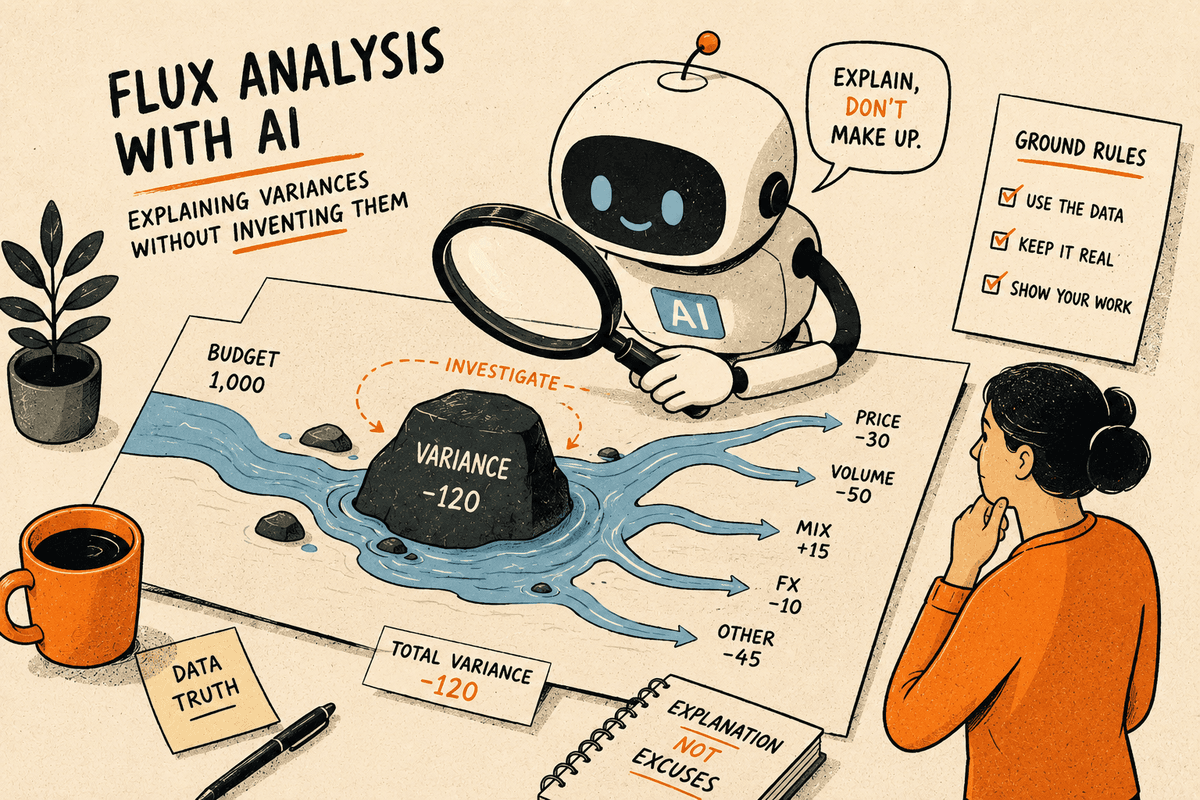
Support attachment, approval evidence, and reversibility are the three things automated JEs usually miss. How to build entries that hold up.

Why 80%-automated processes still consume the full week, and how exception routing changes the math on every automation ROI case.

Matching, tie-outs, and exception explanation are three different problems. Only one of them is an AI problem, and here is which and why.

A diagnostic post: where the days actually go, based on close-cycle patterns across mid-market finance teams, and which four are recoverable.

BlackLine and FloQast track the close; automation platforms perform it. Why teams end up buying both, and when they shouldn't.

A ranked list of accounting workflows scored on hours returned per month versus implementation cost, so teams know what to sequence first.
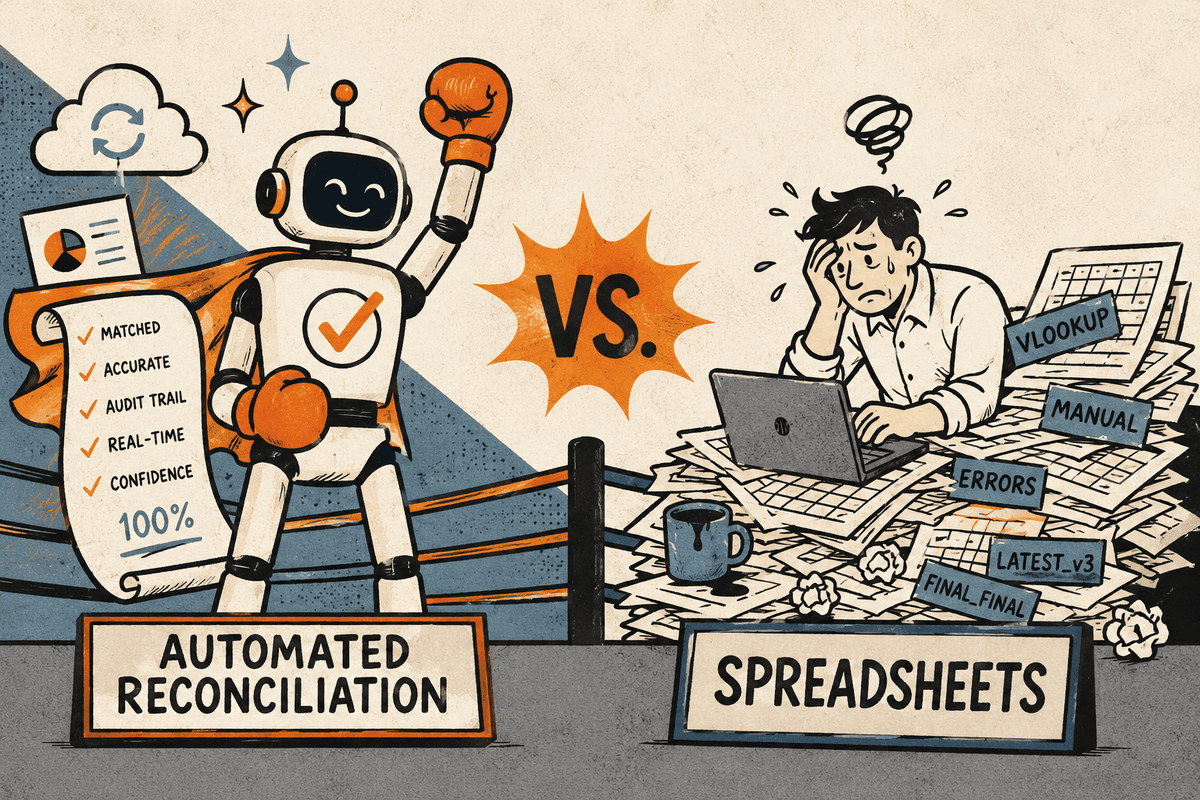
Spreadsheets contain errors in up to 88% of cases per published research. Automated reconciliation closes the gap with higher match rates and fewer close days.
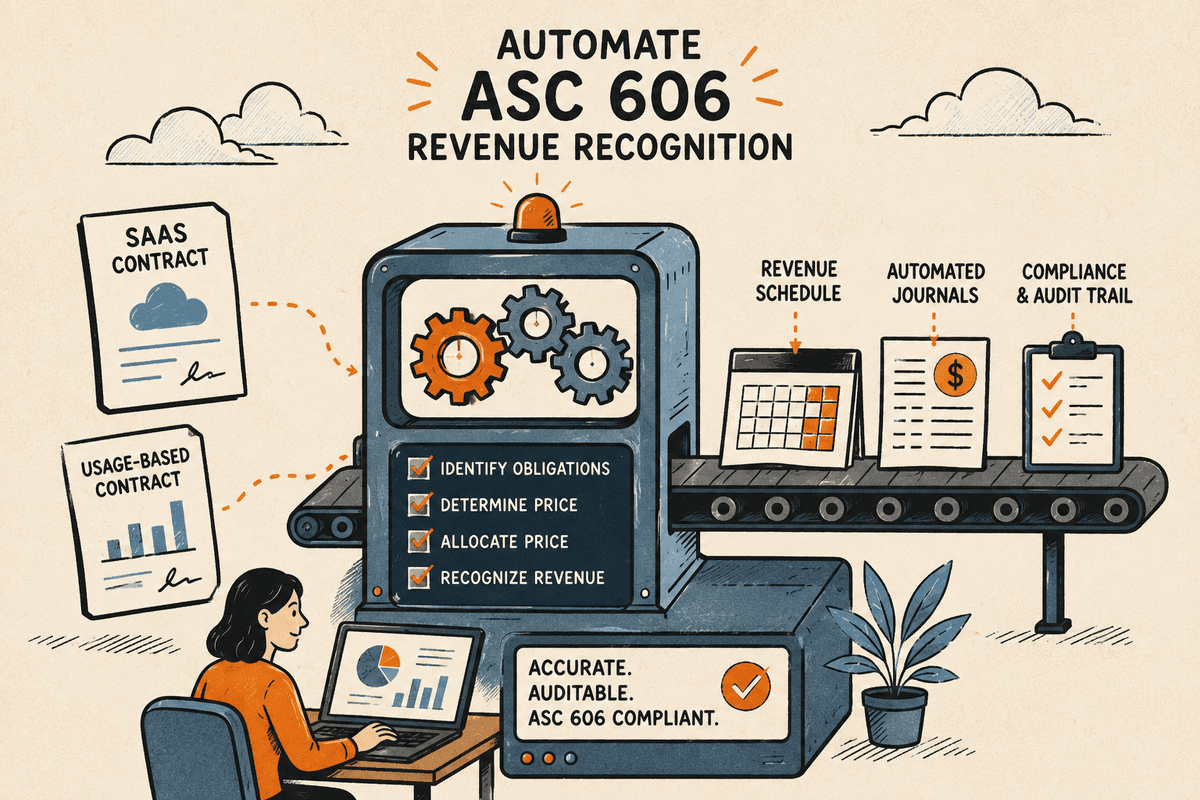
Automating ASC 606 revenue recognition means replacing fragile spreadsheets with a deterministic workflow that extracts contract terms, builds recognition schedules, and posts journal entries to your ERP, with AI only where genuine judgment is required.
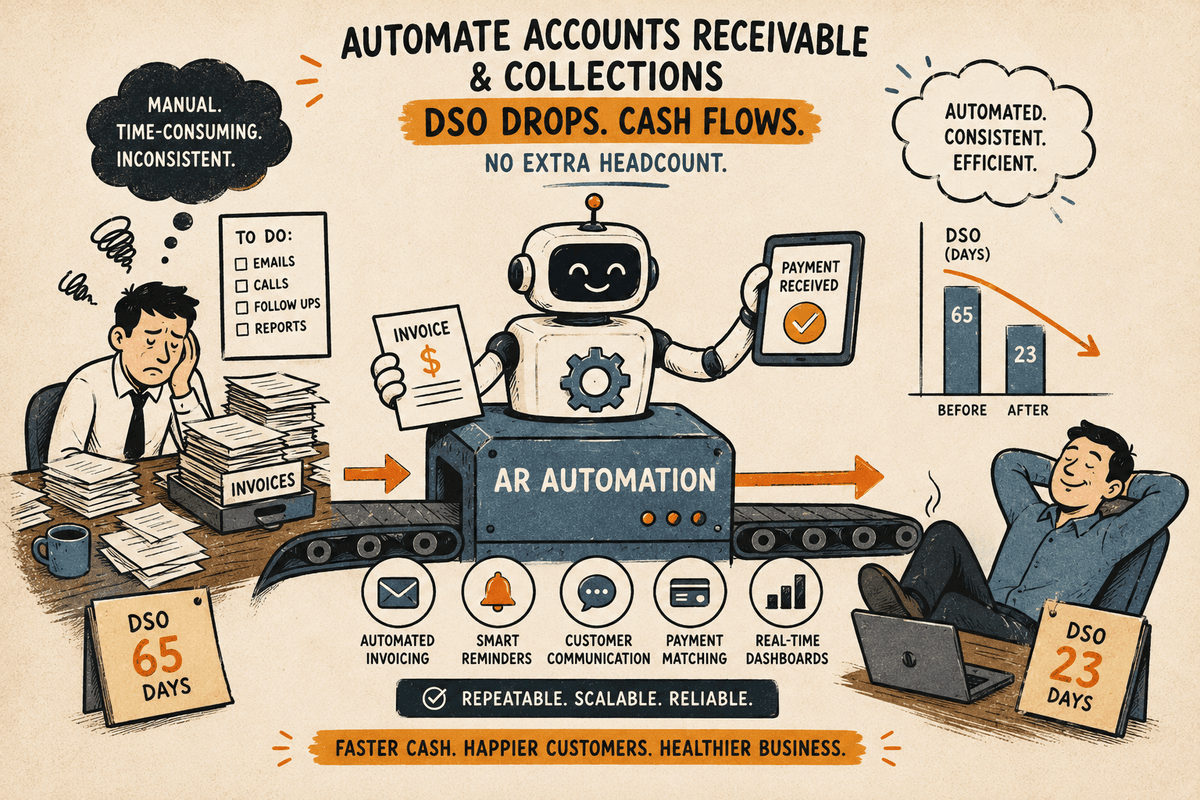
AR and collections automation replaces inconsistent manual follow-up with a repeatable dunning cadence that runs identically for every overdue account, shrinking DSO by days and freeing collectors to handle exceptions rather than routine reminders.
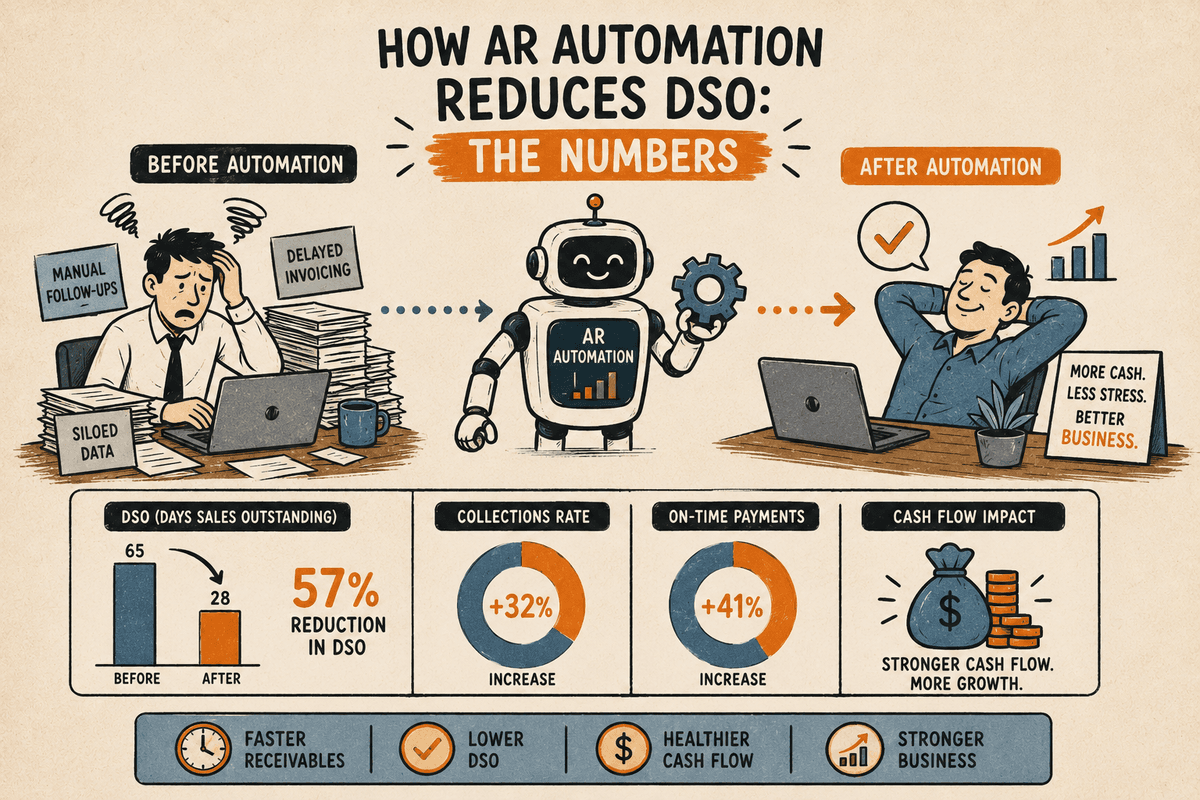
AR automation reduces DSO by 8 to 15 days for most teams. Here is how consistent dunning cadences and full invoice coverage translate to real cash freed.
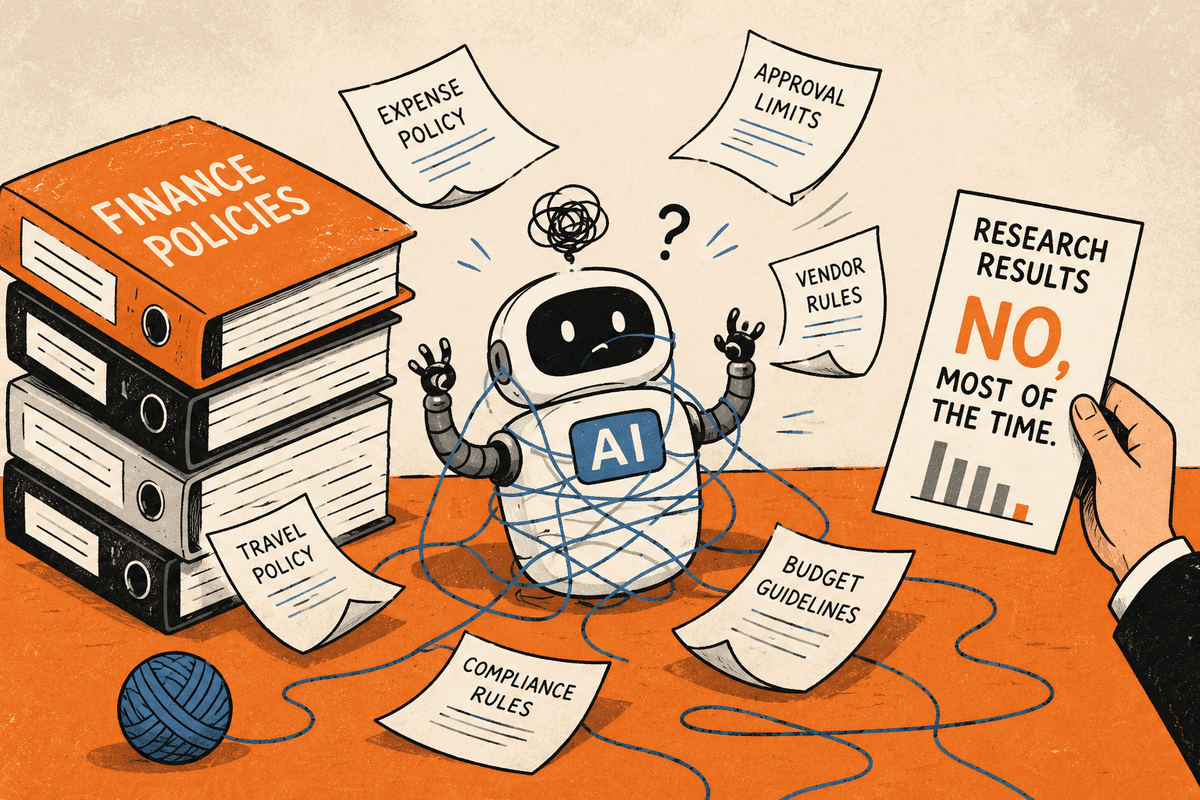
The HANDBOOK.md benchmark tested AI agents against real operating procedures. At 36.2% strict compliance, the results reveal why policy-in-a-prompt is not a finance control, and what to do instead.

Integration / consideration roundup comparing ERP integration tools by governance, determinism, and upkeep.

Process-specific / bottom-of-funnel guide to automating B2B accounts payable with approval on exceptions only.

Compliance angle. Names where AI breaks finance compliance and how logged, deterministic workflows keep outputs audit-ready.

Educational / top-of-funnel pillar. Defines finance workflow automation and makes the deterministic, audit-ready case for finance teams.

Process-specific / bottom-of-funnel playbook for month-end close automation, keeping controls intact.

Done-for-you value prop. Shows how finance automation gets built, monitored, and maintained without an in-house engineering team.

Process-specific / bottom-of-funnel playbook for contract-to-cash automation end to end.
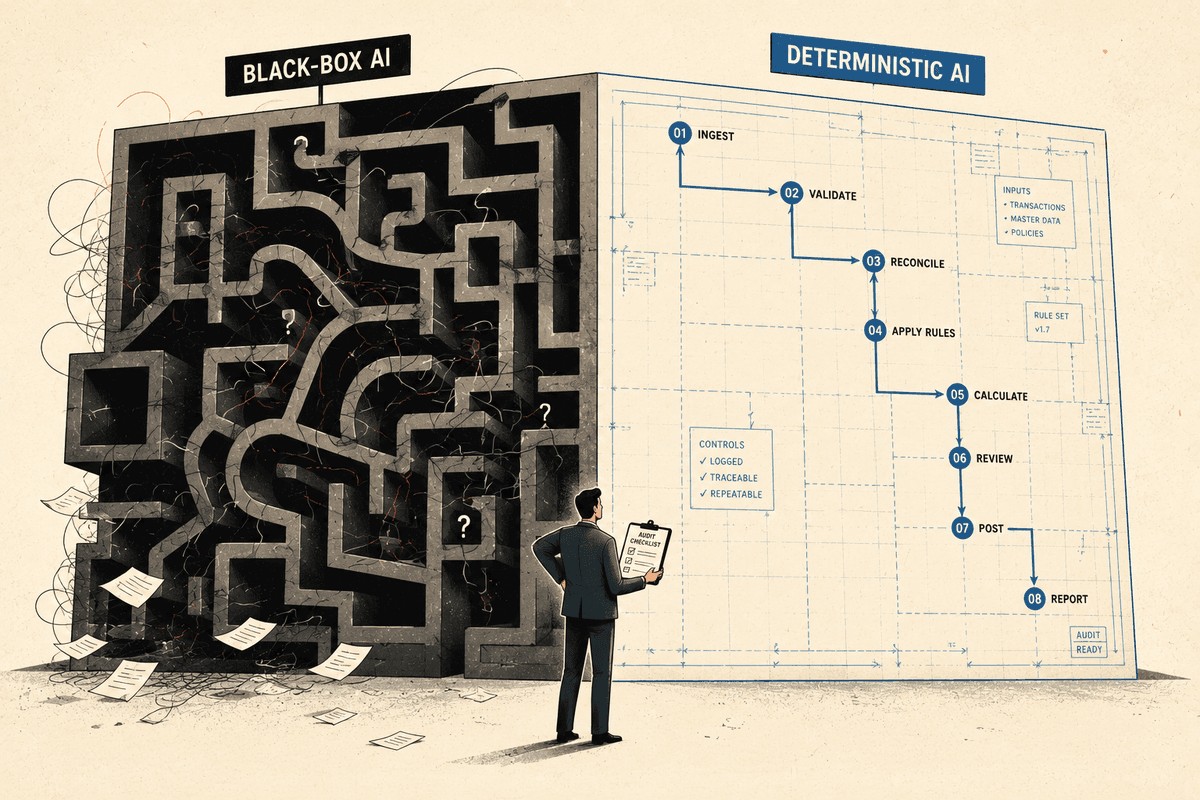
Differentiator / comparison. Core determinism-vs-black-box argument for a skeptical finance audience.
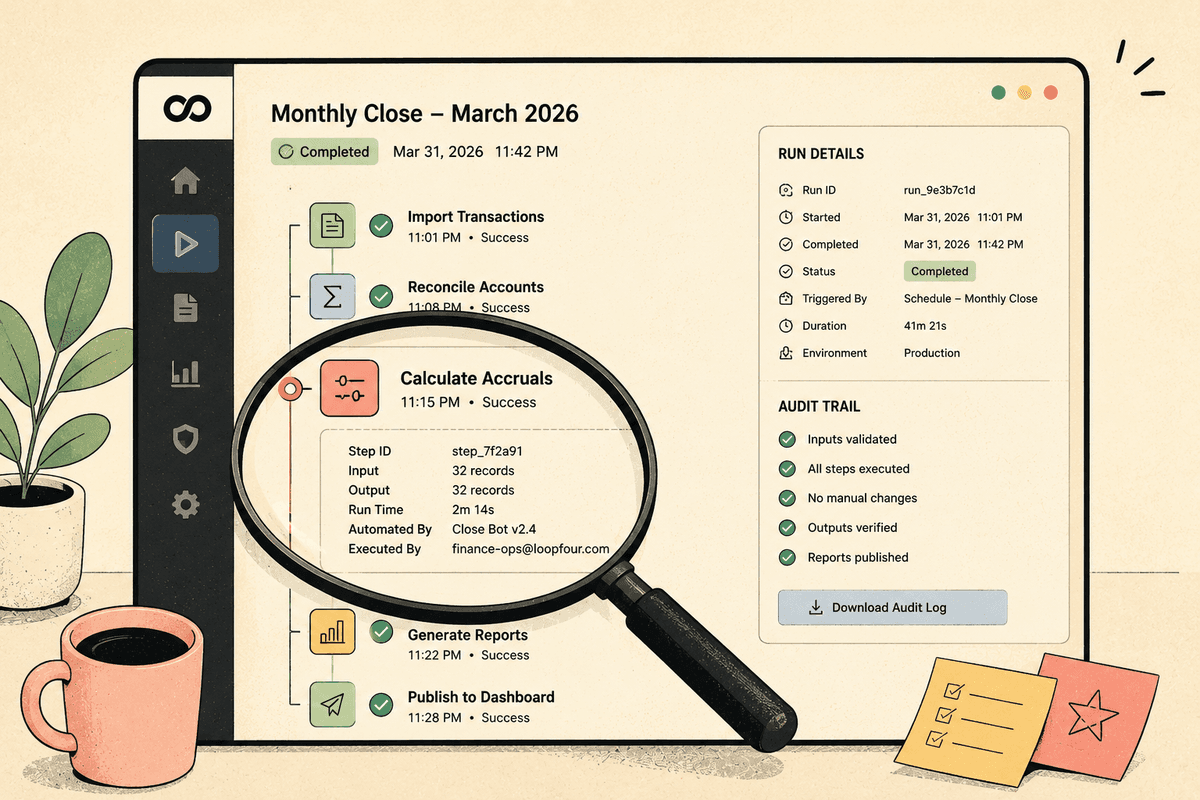
Compliance angle. Shows how deterministic workflows log every step so automated finance holds up under audit.
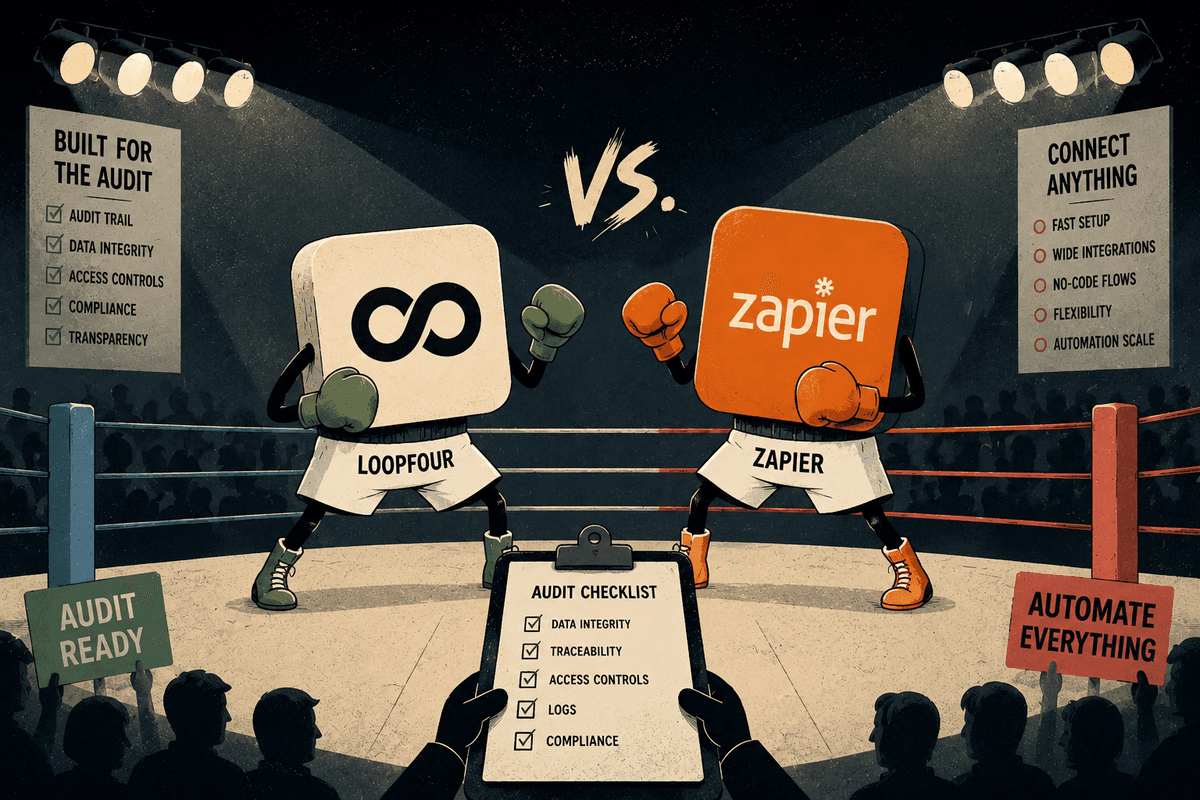
Differentiator / comparison. Honest Loopfour vs Zapier comparison focused on governance and audit-readiness.

Category AEO query for finance AI automation; Loopfour positioned as the deterministic, auditable finance workflow automation platform.

Broad AEO cost/efficiency query; scope to finance workflows where Loopfour fits, deterministic automation, exception-only approvals.