
Balance sheet reconciliation: how to do it every month, account by account (with checklist)
Balance sheet reconciliation, account by account: the monthly order of work, the support each account needs and the sign-off evidence auditors ask for.

Part of the month-end close guide.
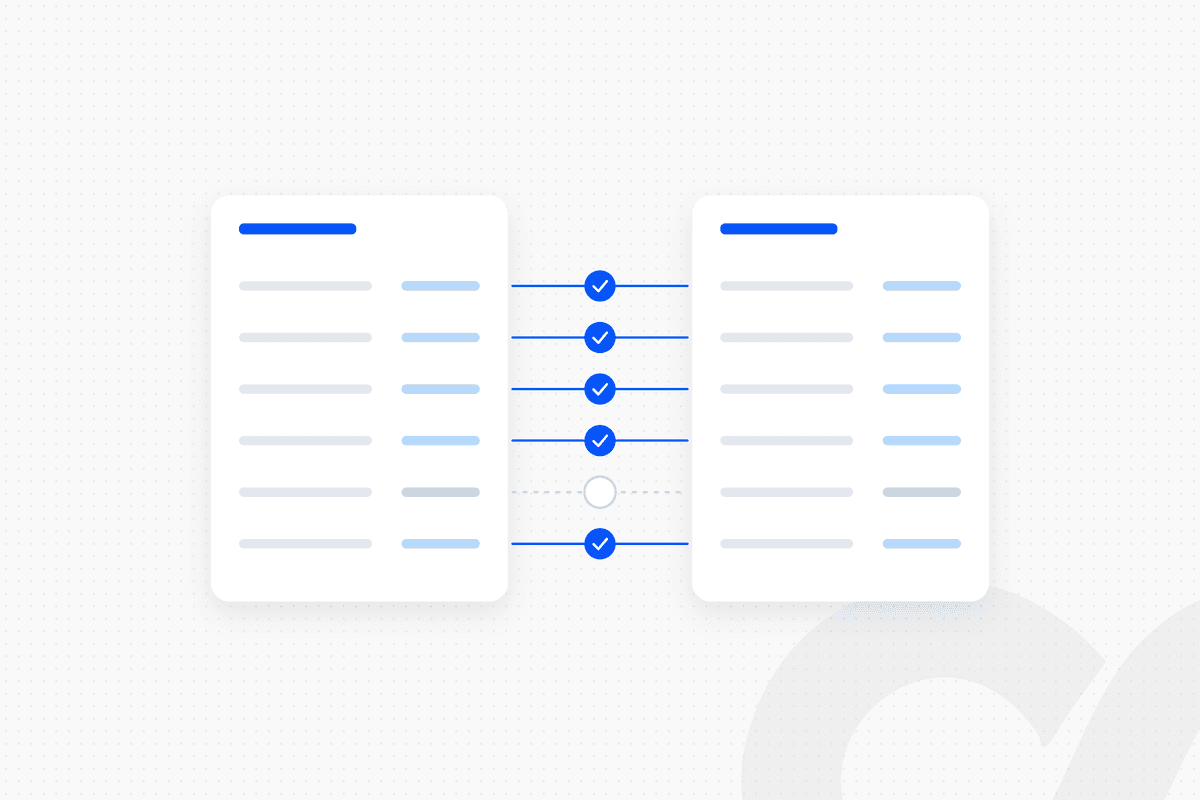
A balance sheet reconciliation proves that each balance sheet account in your general ledger is supported by something outside it: a bank statement, a subledger, a schedule or a third-party confirmation. To do it every month, reconcile the accounts in a fixed order (cash, receivables, prepaids, fixed assets, payables and accruals, deferred revenue, equity), explain every difference as a dated reconciling item, post approved adjustments and have a reviewer sign off. A balance with support and a signature is reconciled. A balance with neither is a guess.
The procedure is simple. Doing it every month, for every account, with evidence an auditor accepts, is where it breaks. This guide gives you the monthly order of work, the support each account needs, a worked example and a checklist you can copy.
Key takeaways
- A balance sheet reconciliation compares the GL balance with independent support and explains every difference as a reconciling item with an owner and a clearing date.
- Three methods cover almost every account: compare to a subledger, analyze the balance line by line, or explain the change from the prior period.
- Work the accounts in a fixed order every month, starting with cash, because later accounts depend on it.
- Evidence matters as much as the math: support documents, aged reconciling items, adjusting entries and dated preparer and reviewer sign-offs.
- Reconciliations that tie to an outside source can run as fixed rules every day, so the month-end review is about exceptions, not tick-and-tie work.
What is a balance sheet reconciliation?
A balance sheet reconciliation is a check, for one account and one period, that the general ledger balance agrees with independent evidence, with every difference explained. It is done by a preparer and approved by a reviewer, and it covers every account on the balance sheet, not only cash.
Oracle's account reconciliation documentation describes three methods, and they map well to most balance sheets (Oracle, About Reconciliation Methods):
| Method | When to use it | Example accounts |
|---|---|---|
| Balance comparison | A subledger or outside balance exists to compare against the GL | Cash, AR, AP, fixed assets |
| Account analysis | No subledger exists, so the preparer explains the GL balance item by item | Prepaids, accruals, suspense and clearing accounts |
| Variance analysis | The balance is best explained by its change from a prior period end | Equity, low-activity reserves |
Pick the method per account once, write it down and keep it. A reconciliation that changes method every month is hard to review and harder to audit.
Why reconcile the balance sheet every month?
Monthly reconciliation keeps errors small and recent, while they are still easy to trace. A difference found in the month it happened usually has one cause. The same difference found at year-end has twelve months of activity layered over it.
Monthly reconciliation also produces the close's evidence. Each signed reconciliation shows that someone compared the balance with support, explained the differences and that someone else reviewed the work. When the auditor samples an account, that file is the answer. The month-end close checklist places reconciliations in the full close sequence; this guide covers the reconciliation step itself.
How to do a balance sheet reconciliation, step by step
Use the same seven steps for every account, so every reconciliation in the file looks the same to the reviewer. The account changes. The procedure doesn't.
- Confirm the cutoff. Subledgers (AR, AP, fixed assets, billing) are closed for the period and posted to the GL before you start.
- Pull the GL balance for the account from the trial balance at period end.
- Pull the support from outside the GL: statement, subledger report, schedule or confirmation, dated at the same period end.
- Compare and list the differences. Each difference becomes a reconciling item with a description, amount, owner and expected clearing date.
- Classify each item. Timing differences (a deposit in transit) clear on their own next month. Errors (a missed amortization entry) need an adjusting entry.
- Post approved adjustments. Adjusting entries go through your normal journal entry approval, with the reconciliation attached as support.
- Sign off. The preparer signs and dates. A reviewer who did not prepare it checks the support, the items and their ages, then signs and dates.
The flow for one account: trial balance → support pulled → difference listed → items classified → adjustment approved → preparer sign-off → reviewer sign-off.
The balance sheet reconciliation, account by account
Each account below follows the same template: what to compare against, the usual differences and the evidence that closes it. Work them in this order, because later accounts depend on earlier ones (AR depends on cash being applied, for example).
Cash and bank accounts
Reconcile each bank account to its bank statement, using balance comparison. Cash comes first because cash receipts and payments feed AR and AP.
- Compare against: the bank statement balance at period end.
- Usual differences: deposits in transit, outstanding checks, bank fees and interest not yet recorded, payments recorded in the wrong period.
- Evidence: the statement, the list of outstanding items with dates, and the entries for fees and interest.
For the full procedure, see how to do a bank reconciliation.
Accounts receivable
Reconcile the AR control account to the AR aging report from the subledger or billing system. The two totals should agree exactly at period end.
- Compare against: the AR aging total, by customer.
- Usual differences: invoices or credits posted directly to the GL, cash received but not applied, billing system and ERP out of sync.
- Evidence: the aging report, the list of unapplied cash and credits, and the review of the allowance for doubtful accounts.
Prepaid expenses
Reconcile prepaids to a prepaid schedule that lists each payment, its service period and the amount amortized to date. This is account analysis: no subledger exists, so the schedule is the support.
- Compare against: the prepaid schedule's closing balance.
- Usual differences: a new prepayment coded to expense, a missed month of amortization, a contract cancelled but still amortizing.
- Evidence: the schedule, the invoices behind each line and the monthly amortization entry.
Fixed assets and accumulated depreciation
Reconcile fixed asset cost and accumulated depreciation to the fixed asset register. Both balances should tie to the register at period end.
- Compare against: the fixed asset register (cost, additions, disposals, depreciation).
- Usual differences: capital purchases expensed, disposals not recorded, depreciation run before late additions posted.
- Evidence: the register rollforward (opening + additions − disposals = closing) and support for additions and disposals.
Accounts payable and accrued liabilities
Reconcile AP to the AP aging report, and reconcile accruals to an accrual schedule that lists each accrual and its basis. AP uses balance comparison. Accruals use account analysis.
- Compare against: the AP aging total; the accrual schedule.
- Usual differences: bills posted directly to the GL, vendor credits not applied, accruals not reversed after the invoice arrived.
- Evidence: the aging report, vendor statements for large vendors, the accrual schedule with its calculation and the reversal entries.
If the AP subledger and GL don't agree, see why the AP aging report doesn't match the GL AP balance, and for tying every subledger at close, how to tie subledgers to the GL at close.
Deferred revenue
Reconcile deferred revenue to the revenue schedule or contract liability rollforward produced by your billing or revenue system. The GL balance should equal billed but unearned revenue at period end.
- Compare against: the deferred revenue waterfall or rollforward (opening + billings − revenue recognized = closing).
- Usual differences: invoices billed outside the revenue system, contract changes not reflected in the schedule, manual revenue entries.
- Evidence: the rollforward, a reconciliation of billings to invoices issued and support for manual entries.
Equity
Reconcile equity accounts with variance analysis: explain the change from the prior period end. Most months, only retained earnings and equity compensation change.
- Compare against: the prior period balance plus documented movements (net income, issuances, stock compensation, distributions).
- Usual differences: entries posted to equity by mistake, prior-period adjustments not documented.
- Evidence: the cap table or transfer agent statement for share activity, board approvals and the stock compensation schedule.
Summary table
| Account | Method | Support | Owner (typical) |
|---|---|---|---|
| Cash | Balance comparison | Bank statement | Treasury or staff accountant |
| Accounts receivable | Balance comparison | AR aging | AR lead |
| Prepaid expenses | Account analysis | Prepaid schedule | Staff accountant |
| Fixed assets | Balance comparison | Fixed asset register | Staff accountant |
| AP and accruals | Comparison and analysis | AP aging, accrual schedule | AP lead |
| Deferred revenue | Balance comparison | Revenue rollforward | Revenue accountant |
| Equity | Variance analysis | Cap table, board approvals | Controller |
A worked example: one prepaid account
A prepaid reconciliation shows how a single missed entry surfaces. All figures here are hypothetical.
Your company pays 12,000 on January 1 for a 12-month software subscription. The schedule amortizes 1,000 a month, so the prepaid balance at March 31 should be 9,000. The GL shows 10,000.
| Item | Amount (hypothetical) |
|---|---|
| GL balance, March 31 | 10,000 |
| Schedule balance, March 31 | 9,000 |
| Difference | 1,000 |
| Reconciling item | March amortization not posted |
The difference is an error, not a timing item, so it needs an adjusting entry: debit software expense 1,000, credit prepaid expenses 1,000. The entry goes through journal entry approval with the reconciliation attached. The reviewer then sees a balance that ties, a named cause and the approved fix, all in one file.
The monthly balance sheet reconciliation checklist
Run this checklist for every account, every month. Copy it into your close tracker.
- Subledgers closed and posted to the GL for the period
- Each account has an owner, a method and a due date in the close calendar
- GL balance pulled from the period-end trial balance
- Independent support pulled and dated at period end
- Every difference listed as a reconciling item with amount, owner and clearing date
- Items classified as timing or error; errors corrected
- Adjusting entries approved through journal entry review, with support attached
- Reconciling items older than your policy limit escalated to the controller
- Preparer signed and dated
- Reviewer (not the preparer) signed and dated
- Unreconciled accounts listed and reported to the controller before the period locks
Where automation fits, and where people sign off
Reconciliations that tie to an outside source or follow a fixed rule can run every day; the month-end review then covers only the exceptions. The judgment stays with people: explaining unusual items, approving adjustments and signing off.
The software vendors already describe this split. Sage Intacct's help notes that most companies reconcile at the end of the month but can match transactions throughout it, and that daily "soft" reconciliations reduce the month-end close (Sage Intacct, About reconciling). Oracle's account reconciliation product lists fixed auto-reconciliation rules, such as "balance is zero", "no activity" since a completed prior reconciliation, a balance within a set range and balances that match within a set tolerance; a reconciliation that meets its rule closes automatically, and anything else goes to a preparer (Oracle, About Auto Reconciliation Methods).
The same split works whatever your ledger. In NetSuite and Sage Intacct, bank matching and subledger tie-outs can run on rules. For what AI can and can't do in this step, see account reconciliation automation: what AI can and can't do.
Loopfour, the deterministic finance workflow automation platform, builds these reconciliations as fixed rules on your existing stack:
bank feed and statement pulled daily → lines matched to the GL on approved rules → subledger totals tied to control accounts → prepaid and fixed asset schedules rolled forward → differences listed as reconciling items with owners → exceptions sent for review in Slack → adjustments approved and posted → preparer and reviewer sign-offs recorded
Every match follows a written rule, and every exception goes to a named person. Nothing is adjusted without approval. Loopfour is SOC 2 Type II certified and SOC 1 Type I certified, and signs Business Associate Agreements (BAAs) with customers.
Want to see which of your reconciliations could run daily? Book a workflow review and we will go through your balance sheet with you.
How to decide which accounts to reconcile first
Rank accounts by risk and volume, and reconcile the high ones every month without exception. Risk is the chance of a material error; volume is the number of transactions that hit the account.
- High volume, high risk (cash, AR, AP, deferred revenue): reconcile monthly; match daily where possible.
- Low volume, judgment-heavy (accruals, reserves, equity): reconcile monthly or quarterly per your written policy, with a full explanation of the balance.
- Zero or unchanged balances: let a rule confirm the balance is zero or unchanged, and close the reconciliation automatically with a record of the check.
Write the frequency into your reconciliation policy, so a reviewer or auditor can see that a quarterly account is quarterly by design, not by neglect.
Frequently asked questions
What is a balance sheet reconciliation?
A balance sheet reconciliation compares the general ledger balance of a balance sheet account with independent support, such as a bank statement, a subledger, a schedule or a third-party confirmation, and explains any difference. A preparer completes it and a reviewer signs it off for each period.
How often should balance sheet accounts be reconciled?
Reconcile cash, AR, AP, accruals and deferred revenue every month as part of the close. Low-activity, low-risk accounts can move to a quarterly cycle if your policy says so and a rule confirms nothing changed. Cash and high-volume clearing accounts are worth matching daily so month-end only reviews exceptions.
What is the difference between a bank reconciliation and a balance sheet reconciliation?
A bank reconciliation is one balance sheet reconciliation, for the cash accounts, using the bank statement as support. A full balance sheet reconciliation covers every balance sheet account, each against its own support, including receivables, prepaids, fixed assets, payables, accruals, deferred revenue and equity.
What documentation do auditors expect for balance sheet reconciliations?
Expect to show, for each account, the GL balance, the supporting balance and its source document, an explanation of every reconciling item with its age, any adjusting entry, and the names and dates of the preparer and the reviewer. Reconciling items that carry forward month after month are the first thing a reviewer questions.
Can balance sheet reconciliations be automated?
Yes, for accounts that tie to an outside source or follow a rule. Matching bank lines, tying subledgers to the GL, checking zero-balance accounts and rolling prepaid and fixed asset schedules can run as fixed rules. People still review exceptions, approve adjustments and sign off.
What is a reconciling item?
A reconciling item is a specific, explained difference between the GL balance and the support, such as a deposit in transit, an unrecorded bank fee or an invoice posted after the subledger cutoff. Each one needs a description, an amount, an owner and a date by which it clears.
Conclusion
Balance sheet reconciliation is the same seven steps for every account, every month: confirm the cutoff, pull the balance, pull the support, list the differences, classify them, post approved adjustments and sign off. Work the accounts in a fixed order, keep the evidence with each reconciliation and let rules do the matching that never needed judgment. The month-end review then covers what deserves a person's time.
Tell us the one workflow your team dreads. We will show it running. Book a demo.